
Nutritional composition of watercress
Introduction
Watercress is part of the Cruciferae or Brassicaceae family, meaning it is related to other vegetables like cabbage, brussel sprouts, broccoli, rocket, cauliflower and radish.
Cultivated in pure spring water, its health benefits have been known since ancient times. It is believed to have originated in Greece and remains an integral part of Mediterranean diets. In 500BC, Hippocrates, the father of medicine, is said to have located his first hospital close to a stream to ensure fresh watercress to help treat his patients. As a longstanding British favourite, it has been used in herbal remedies from the 1600s, and has been commercially cultivated since the I800s.
Watercress is part of the fruit and vegetable food group, with 80g (one cereal bowl full) providing one of the 'at least five a day' portions recommended by the Department of Health to help reduce the risk of cardiovascular disease and many other chronic conditions.
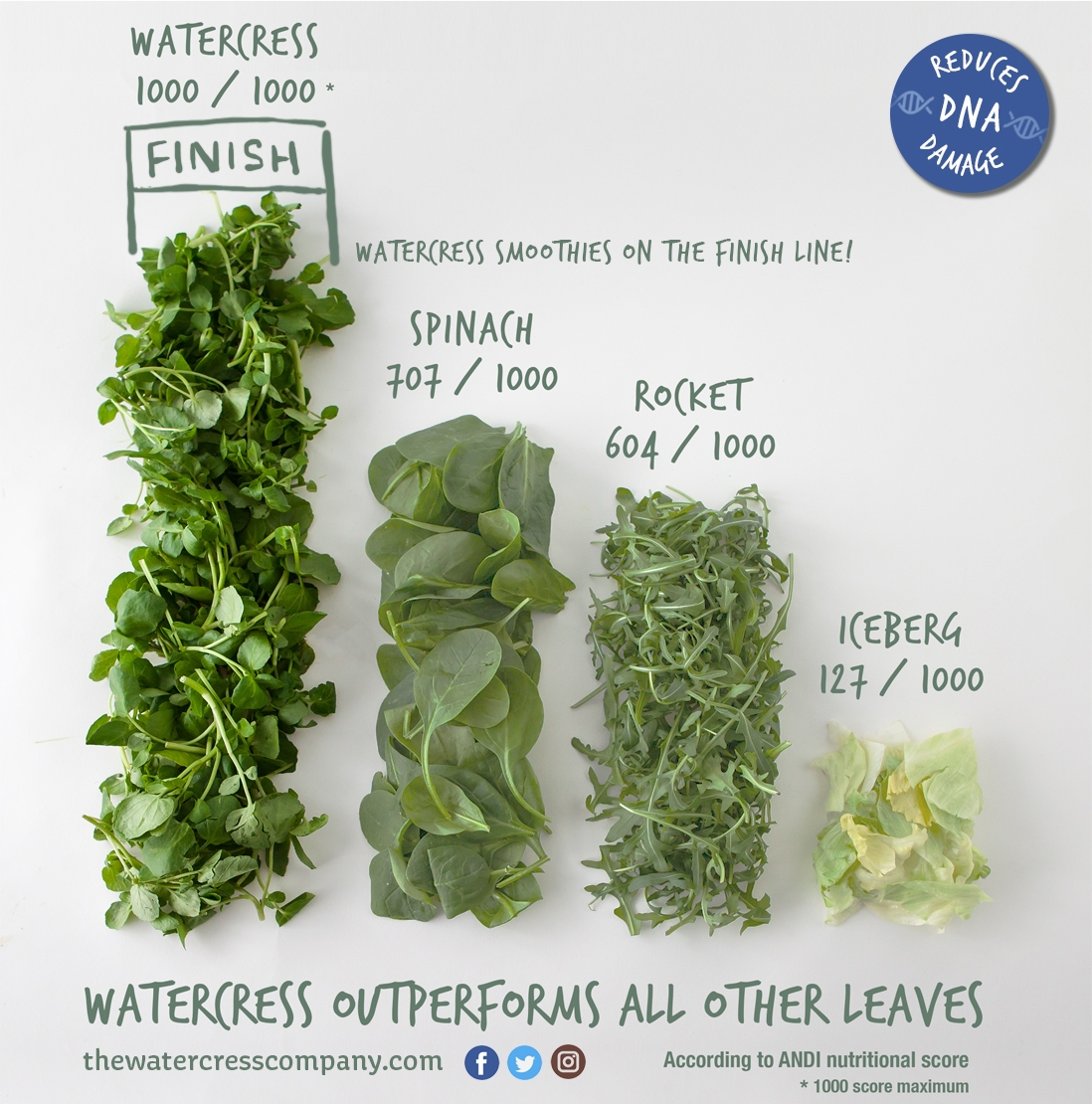
See how watercress is the winner of all the salads - The Super Salad.
Research has shown that the health benefits that come from a diet rich in fruit and vegetables may be more complex than first thought; not only do the individual nutrients and phytochemicals provide a plethora of benefits on their own, but also through their interaction with each other.
Watercress is naturally low in calories, virtually fat free and contains a wide range of essential vitamins and minerals. It is also a source of a number of phytochemicals with potential health benefits. These include lutein, quercetin, phenolic acids, and glucosinolates. The latter release isothiocyanates, including phenylethyl isothiocyanate (PEITC), of which watercress is the richest known source. PEITC is a key contributor to the distinctive peppery flavour of watercress and in a large number of in vitro and animal studies has been shown to have a range of positive effects.
Watercress is sold as a fresh salad vegetable, by itself or mixed with other salad leaves, and is readily available from greengrocers and supermarkets. It has been enjoying a renaissance of late with annual sales increasing to more than £55 million.
Watercress is very versatile, and can be enjoyed as a salad vegetable, in soups and smoothies or as an ingredient in cooked dishes such as stir-fries, sauces for pasta and other meals, pizza and fish dishes.
What is the nutritional composition of watercress?
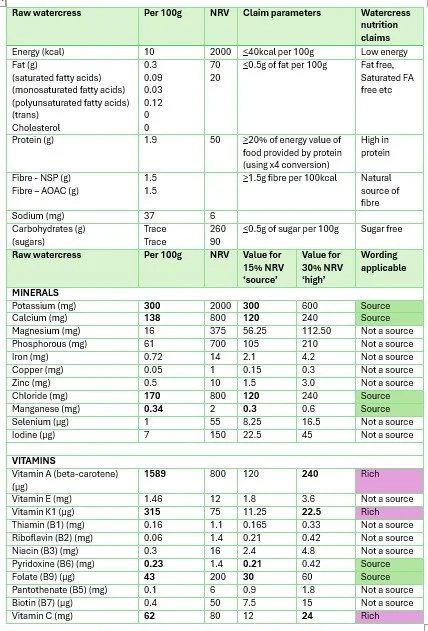
Raw watercress is ‘high’ in vitamin A (as beta carotene), vitamin C and vitamin K1 - providing over 30% of the nutrient reference value (NRV) of each. Watercress is also a ‘source’ of folate, vitamin B6, calcium, potassium, chloride and manganese providing over 15% of the NRV of each. In addition, watercress is low in fats and saturated fats and is naturally sugar free. Watercress is naturally high in protein and and is a source of fibre.
Table 1. Nutrient content of watercress
Vitamin A
Watercress is a rich source of vitamin A with IOOg providing 1589µg. Watercress provides vitamin A via beta-carotene which has provitamin A activity.
What does Vitamin A do in the human body?
Vitamin A is an essential fat soluble vitamin and is necessary for normal vision (including night vision), structure and function of the skin and mucous membranes, reproduction, embryonic development, growth and cellular differentiation, and for the maintenance of immune function (Reference 8).
Vitamin C
Watercress is a rich source of vitamin C with IOOg providing 62mg.
What is Vitamin C good for?
Vitamin C is necessary for the normal structure and function of blood vessels and connective tissues (as required for normal gums, skin, bones, cartilage and wound healing). It increases the gastrointestinal absorption of non-haem iron (the form of iron found in plant foods), and as an antioxidant helps to prevent the cell and tissue-damaging effects of free radicals. Vitamin C is needed to synthesise neurotransmitters making it essential for normal neurological function (Reference 8). Higher plasma vitamin C levels may benefit cardiovascular health.
Folate - and other B vitamins
Watercress is a source of folate with IOOg providing 43µg. Folate is a B vitamin naturally occurring in food. Folate is often referred to as folic acid, which is a manufactured form of the vitamin. The National Diet and Nutrition Survey (NDNS) has indicated poor folate status amongst some young women and older people (Reference 9). Watercress also provides useful amounts - around I 1% RDA per I OOg - of thiamin (B I) and vitamin B6 which are required for the metabolism of carbohydrate and protein.
Folate (and vitamin B6) is also involved in the maintenance of normal blood levels of the amino acid homocysteine. Elevated levels have been associated with modestly increased risk of coronary heart disease and stroke. The main nutritional cause of raised plasma homocysteine in most healthy populations is folate insufficiency (Reference 10). There is ongoing debate as to whether this is a causal relationship.
What does folate do for the body?
Folate is also needed for normal cell division, blood formation (including haemoglobin) and structure of the neural tube in developing embryos. To reduce the risk of neural tube defects, women who are planning pregnancy are advised to take a daily 400pg supplement of folic acid until the 12th week of their pregnancy and to eat more good sources of folate such as green leafy vegetables, and foods fortified with folic acid.
Folate is involved in the synthesis, repair, and functioning of DNA, and a deficiency may result in damage to DNA, with subsequent tumour initiation. A meta-analysis found that folate from food sources may offer some protection against colorectal disease (Reference 12). However, positive associations may be confounded by nutrients such as fibre, which accompany a diet naturally rich in folate (Reference 13).
Calcium
Watercress is a source of calcium containing 138mg per IOOg. Calcium is needed for the normal structure of bones and teeth, nerve and muscle function, blood coagulation and the function of digestive enzymes. It can help to maintain healthy blood pressure and contribute to the release of hormones such as insulin (Reference 8).
Which foods are rich in calcium?
Many green leafy vegetables, spinach in particular, contain high levels of oxalates, which can significantly reduce calcium bioavailability. However, like kale, watercress is a low oxalate vegetable containing <2.5mg/100g watercress. Fairweather-Tait et al (Reference 15) have shown that the fractional absorption of calcium from watercress soup is 27.4% which compares well to the 35.7% fractional absorption from calcium-enriched skimmed milk in the same study.
The NDNS survey indicated that 8% and 5% of 19-24 year old women and men respectively, have calcium intakes below the LRNI, which puts them at risk of deficiency (Reference 9). This is of particular concern since the twenties is the last window of opportunity for increases in bone density before peak bone mass is attained (Reference 16).